
VasCare: Your Solution for Effective Hemorrhoid Treatment
VasCare’s Corpus Christi Clinic offers comprehensive and trusted expertise and relief for those suffering with hemorrhoids. Our patient-centered approach ensures tailored solutions that prioritize both comfort and long-term wellness.
With cutting-edge technology and experienced professionals guiding each step of the healing journey, VasCare fosters trust and confidence in their expertise.
VasCare’s commitment to accessibility and transparent pricing makes quality treatment attainable for all, empowering individuals to prioritize their health without undue financial strain. For effective, compassionate, and accessible hemorrhoid treatment, VasCare stands as the premier choice.

Are You a Candidate? Take the Assessment.
Understanding Hemorrhoid Embolization Procedure
VasCare P Dedicated, Non-Surgical Hemorrhoid Treatment
Hemorrhoids develop when the veins in the lower rectum and anus become swollen due to increased pressure or weakened vessel walls. Hemorrhoidal Artery Embolization (HAE) is a minimally invasive procedure that reduces blood flow to these swollen veins, causing them to shrink and relieve symptoms such as bleeding and pain. Many patients experience significant symptom improvement within weeks after treatment.
The procedure is performed without surgery or large incisions. Instead, a small catheter is guided through blood vessels using advanced imaging technology to deliver tiny particles that block the arteries feeding the hemorrhoids. This results in less pain and a quicker recovery compared to traditional treatments.

Benefits of a Hemorrhoid Embolization Procedure
Minimally Invasive
Hemorrhoid embolization procedures are minimally invasive, typically requiring only a small incision in the groin, leading to faster recovery times and reduced risk of complications compared to traditional surgical methods.
Effective Symptom Relief
Customized Treatment
Outpatient Procedure
Reduced Recurrence Rates
What Are Hemorrhoids?
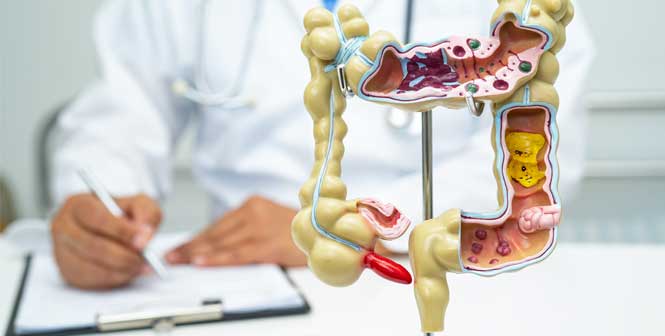
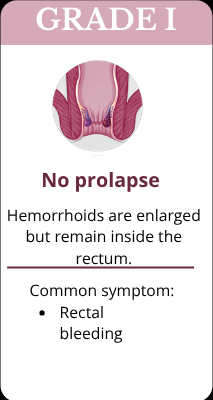
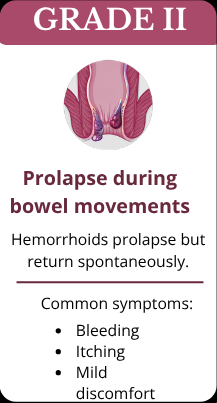
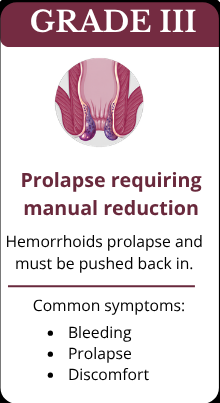
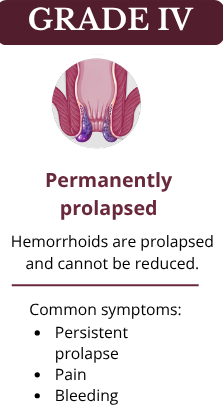
Hemorrhoids, often referred to as piles, occur when veins in the rectum and anus become enlarged. In some cases, the walls of these blood vessels stretch so much that the veins protrude and become irritated. Hemorrhoids are most often categorized into four grades based on severity:
Grade 1
Grade 2
Grade 3
Grade 4
Symptoms of Hemorrhoids
Hemorrhoid symptoms might differ based on the hemorrhoid grade and type. Some common symptoms include the following:
Bleeding
Pain
Itching
Burning
Different Types of Hemorrhoids?
Internal Hemorrhoids
External Hemorrhoids
Thrombosed Hemorrhoids
What To Expect


Consultation
1. Initial Consultation and Symptom Review
You’ll have an initial consultation to discuss your symptoms, medical history, and overall health with your specialist.
2. Physical Exam and Diagnostic Imaging
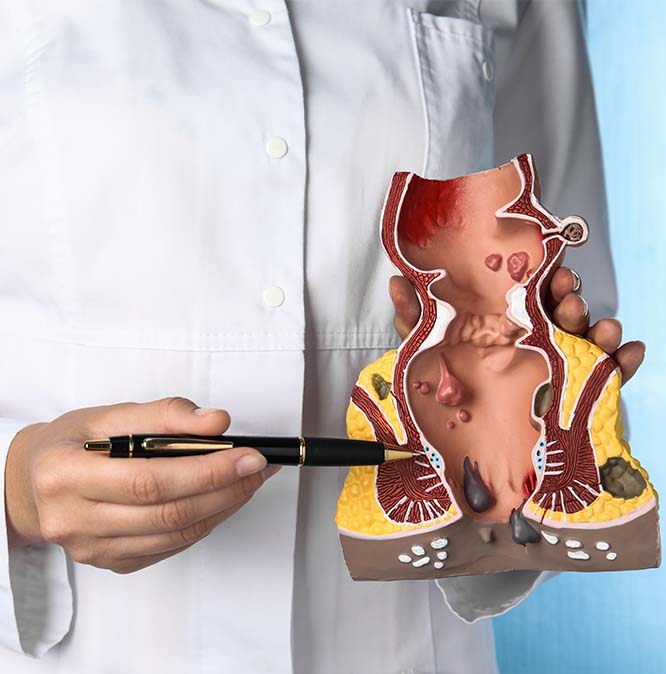
A thorough physical examination will assess the anal and rectal area for hemorrhoids. Additional tests, such as colonoscopy, digital rectal exam (DRE), or sigmoidoscopy, may be used to visualize internal hemorrhoids and determine their severity.
3. Assessing Suitability & Next Steps
Based on your exam and imaging results, the doctor will discuss your diagnosis and explain treatment options, including hemorrhoid embolization. If suitable, we’ll develop a personalized treatment plan.
Procedure
1. Arrival at the Facility
You’ll check in at the clinic or hospital and be escorted to the procedure area. Our team will guide you through the process and answer any last-minute questions.
2. Changing & Final Preparation
You’ll change into a medical gown and remove any jewelry or personal items. A nurse will review your medical history and confirm your consent forms are complete.
3. Anesthesia & Relaxation
Moderate “twilight” sedation is administered to help you relax. Local anesthesia is applied to numb the catheter insertion site, usually in the upper thigh or wrist.
4. Catheter Insertion
A small incision is made at the numbed site. A thin, flexible catheter is carefully guided through the blood vessels to the arteries supplying the hemorrhoids, using live imaging.
5. Embolization Process
Tiny particles and coils are injected through the catheter to block blood flow to the hemorrhoidal tissue. This reduces the size of the hemorrhoids and decreases bleeding.
6. Monitoring & Imaging
Your vital signs are closely monitored throughout the procedure. Additional imaging confirms that the embolization is complete and accurately placed.
Follow-Up Care
1. Post-Procedure Monitoring
After the procedure, you’ll spend a short time in the recovery area until your vital signs are stable. You’ll be discharged the same day once you’re comfortable and ready to go home.
2. Instructions for Recovery
You will be given detailed recovery instructions, such as avoiding heavy lifting and staying hydrated. It’s normal for your hemorrhoid symptoms to improve gradually over the next few weeks as the treated tissue shrinks and heals.
3. Follow-Up Visits
We recommend scheduling a follow-up appointment within 1–2 weeks to check your healing progress. Symptom improvement may continue over several weeks as the treated tissue shrinks and heals.




